Knowledge · automotive market entry

Bosch in China: Local Market Speed Beats Export Marketing.

For industrial, automotive, and engineering-led companies trying to grow outside the market where their reputation was built.

Bosch's China business grew around local automakers, electrified powertrains, and software-defined vehicles. The marketing lesson starts with how the company operates inside the market.

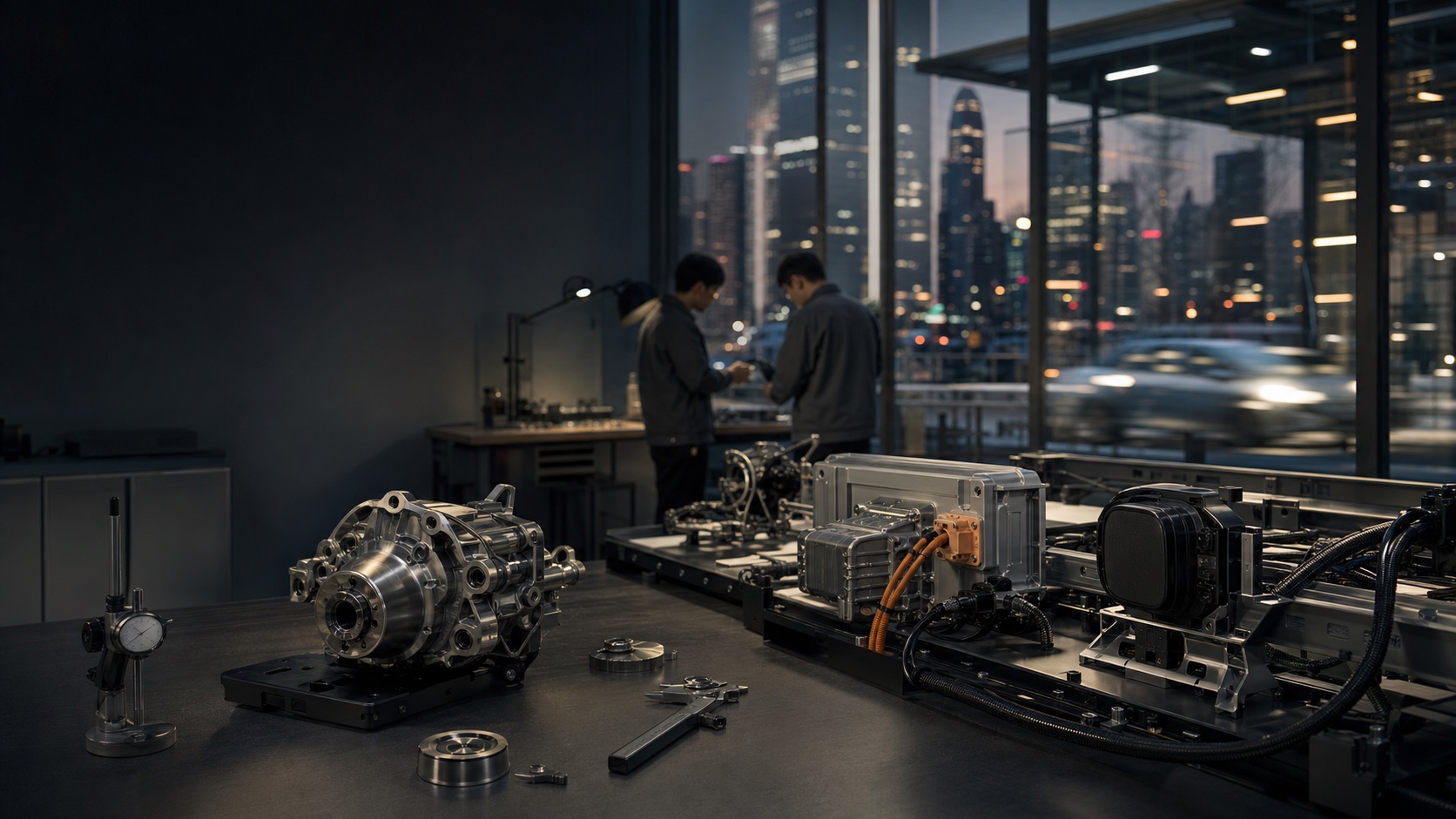
Unbranded mechanical and electric vehicle systems on an automotive engineering bench in Shanghai
The target market changes the customer, product cycle, integration work, proof, and pace of the commercial argument.

The Bosch numbers show two automotive speeds.

Bosch ended 2025 with 91.0 billion euros in group sales. Revenue was slightly higher than in 2024, but profit after tax moved from a 1.332 billion euro gain to a 363 million euro loss. The annual report identifies 2.7 billion euros in restructuring expenses as the main driver of the earnings decline.

Mobility remained the largest Bosch sector, with 55.8 billion euros in sales. The market under that number was moving in different directions. Vehicle production in China rose 8.3 percent to 33.1 million units. Production in the European Union and United Kingdom fell 2.1 percent to 14.2 million units. North America also declined 1.2 percent to 15.3 million.

This is the part a headline about a German industrial loss can miss. Bosch faces a difficult cost and restructuring problem. It also serves a Chinese vehicle market producing more than twice as many units as the European Union and United Kingdom combined. The growth market has its own manufacturers, technology priorities, price pressure, and development tempo.

33.1mvehicles produced in China in 2025, up 8.3 percent year over year.
14.2mvehicles produced in the European Union and United Kingdom, down 2.1 percent.
65%+of Bosch's new China Mobility orders in 2024 came from electrified powertrains and software-defined mobility.

China became a local operating system, not a distant sales territory.

In April 2025, Bosch reported that its China Mobility revenue had grown 4.0 percent in 2024 to 116.6 billion yuan, roughly 15 billion euros. Bosch said it worked with almost every Chinese automaker as well as international manufacturers operating in China.

The customer list matters because it changes the direction of the work. Bosch cited new China customers for its driver-assistance product family, a first local customer for an AI cockpit computer, a Chinese automaker for brake-by-wire, and three local manufacturers for a steer-by-wire system developed through its joint venture.

That is more than distribution. Product teams are solving current integration problems with manufacturers inside the market. The supplier hears the objection earlier, sees the packaging constraint, works inside the target cost, and learns which feature needs to ship next. Sales and marketing receive sharper material because the commercial claim comes from live product work.

Local market credibility begins where the product, customer, and feedback loop meet. GMA cross-border marketing analysis
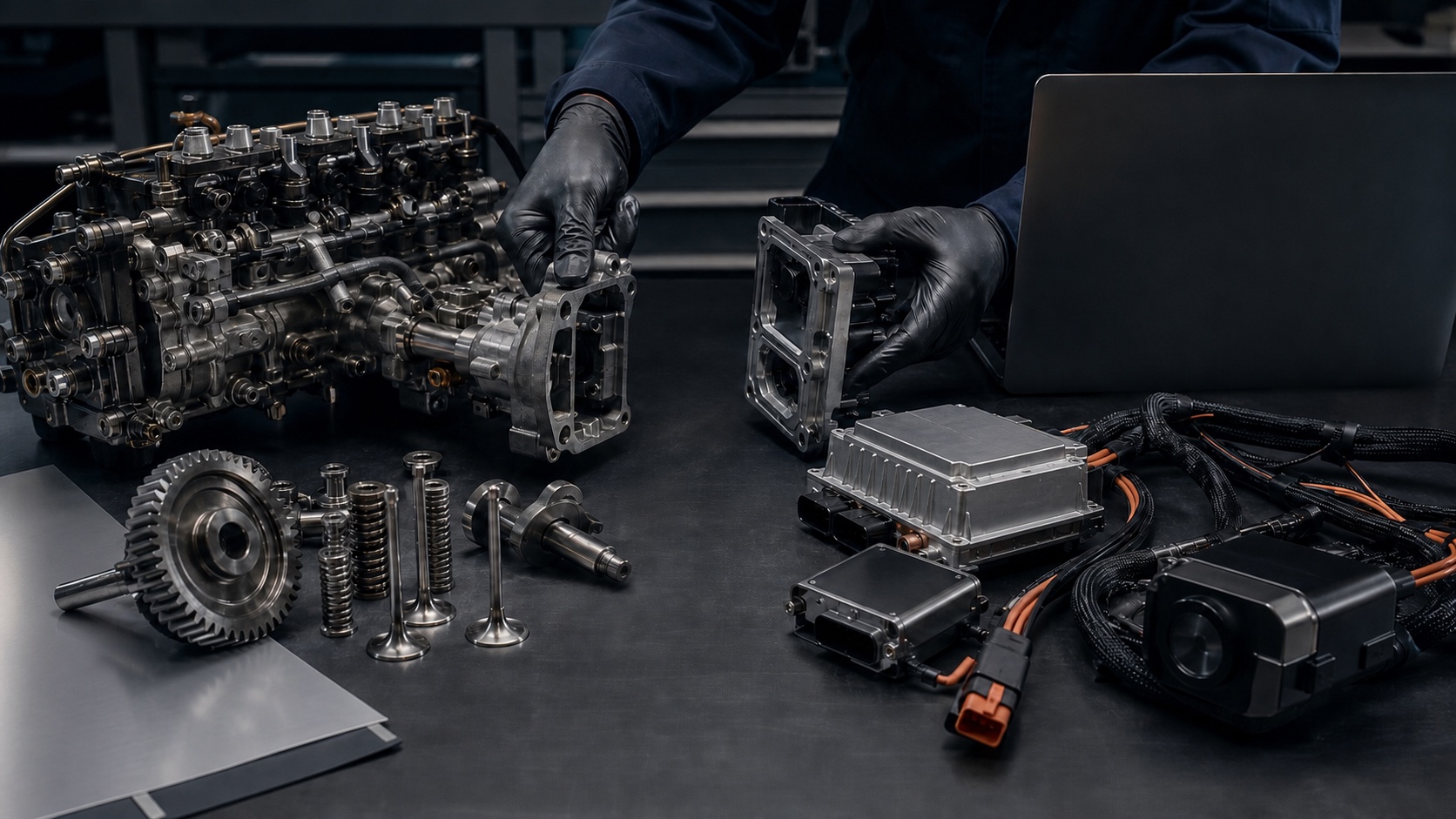
Engineer comparing unbranded combustion-era components with electric vehicle control hardware
A supplier can keep its engineering discipline while the valuable unit of work moves from a mechanical component to a connected hardware and software system.

The product story changed with the vehicle.

Bosch's China update described a market that thinks about the vehicle through software. Its new order mix followed that demand. Electrified powertrains and software-defined mobility accounted for more than 65 percent of newly won China Mobility orders in 2024.

The offer therefore moves away from an isolated component claim. The buying case includes integration speed, computing capacity, over-the-air updates, sensor fusion, flexible configuration, unit cost, and the path into series production. A product page built around the old component category would miss the reason the new buyer is buying.

This is where international marketing often falls behind the business. The company enters a new market with a translated version of the offer that made it successful at home. The local customer has already reorganized the category. Search terms, RFP language, comparison criteria, proof, and sales objections now point somewhere else.

Bosch kept the industrial foundation and changed the commercial unit around it. Hardware, software, services, and local integration appear together. The marketing value comes from making that shift legible to the customer.

The marketing advantage is built before the campaign begins.

An export campaign can create awareness. It cannot repair an offer whose category, proof, response speed, or service model still belongs to the home market.

The Bosch example points to five operating choices that make international marketing stronger:

  1. Work with current target-market customers. Their product plans and objections should shape the public argument.
  2. Sell the category the market is building. The China story centers on electric, software-defined, assisted, and connected mobility.
  3. Shorten the distance between integration and copy. A concrete implementation detail is stronger than a broad claim about innovation.
  4. Make speed visible. Buyers need to see configuration, integration, production, support, and update paths before they believe the supplier can match the market.
  5. Give local sales a local proof system. Technical fit, standards, service, delivery, partner coverage, and product-roadmap evidence should travel together.

The name Bosch attracts attention. The repeatable lesson is the sequence behind the name. Market contact informs the offer. The offer produces proof. Marketing organizes that proof around the local buying decision.

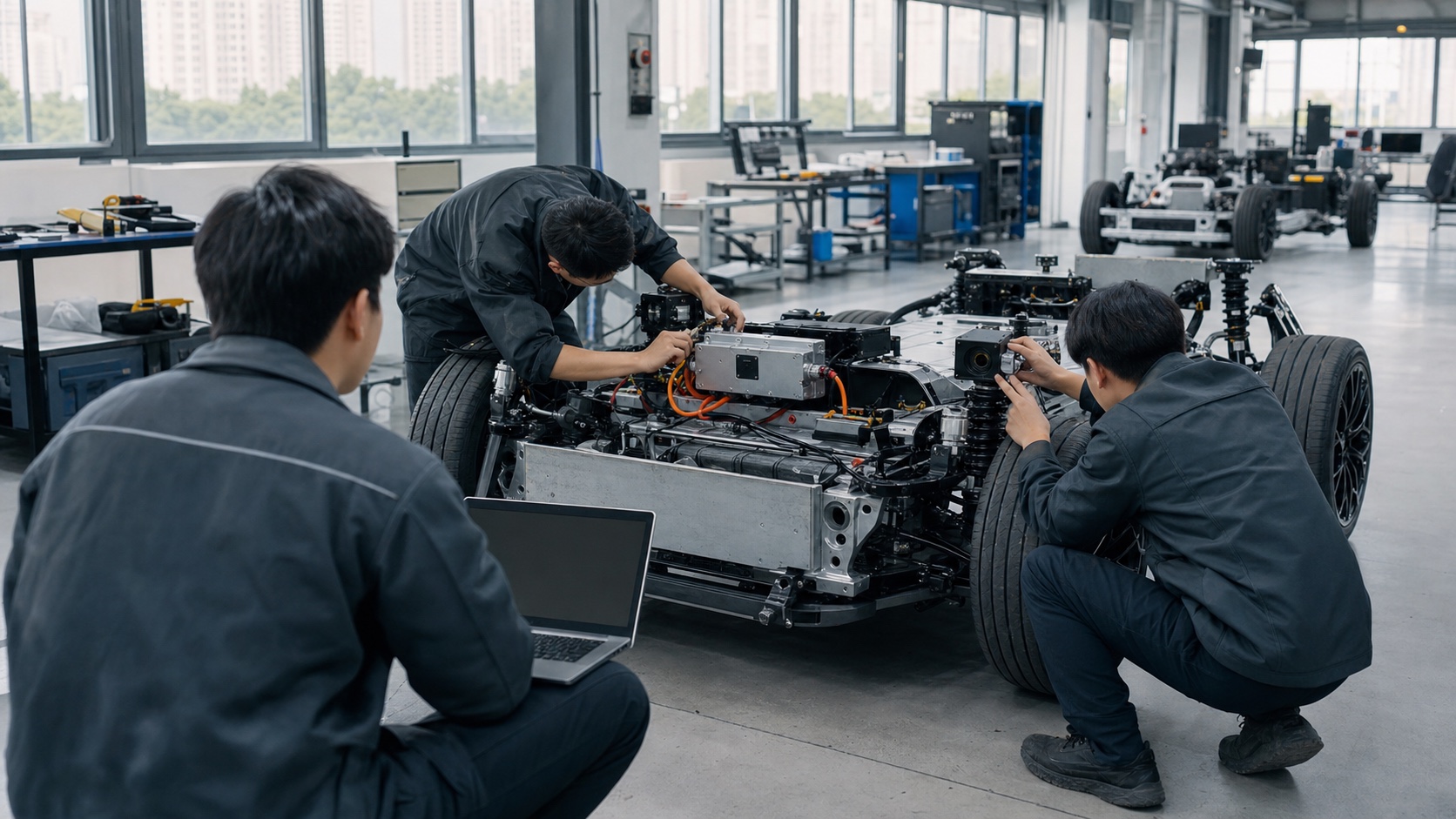
Engineers integrating unbranded control and sensor systems into an electric vehicle development chassis
The local argument gets specific when engineering, sales, and the customer are working on the same integration problem.

What a German supplier should carry into the United States.

The same mechanism applies when a German industrial company enters the U.S. The American buyer does not inherit the supplier's German reputation. The buyer sees a category, a technical risk, a launch schedule, a service question, and a commercial decision that must survive internal review.

A German automotive supplier can arrive with strong European programs and still leave the American buying case unfinished. U.S. OEM and tier-one teams may need answers on APQP and PPAP ownership, customer-specific requirements, launch support, local service, warranty, change control, production location, tariff exposure, and the path from sample to series production.

Those answers belong in more than a sales call. They should shape the U.S. category page, technical pages, distributor or partner material, RFP language, event follow-up, search visibility, and the first response after an inquiry.

The practical build starts with one buyer and one product family:

  1. Record the questions asked before the U.S. buyer adds a new foreign supplier.
  2. Separate German proof that travels from proof that needs a U.S. explanation.
  3. State the local service, integration, compliance, and response path.
  4. Build one U.S. page that answers the buying case in the order the buyer uses.
  5. Keep sales material, search pages, partner language, and follow-up consistent.

This is the commercial value of the Bosch story for smaller exporters. The target market becomes part of product and marketing work early enough to change the outcome.
A mid-sized exporter cannot copy Bosch's scale.

Bosch has engineering centers, joint ventures, manufacturing depth, global customer access, and capital that a mid-sized supplier does not. A Bosch partnership count or China revenue figure cannot be turned into a benchmark for every German company.

The smaller company can copy the order of operations. It can choose a narrow customer group, put a technical and commercial owner close to that buyer, adapt the offer around observed demand, document the proof, and build the market-facing pages before buying broad attention.

The smaller company can also stop sooner. If local customers do not recognize the category, cannot use the proof, or need a service model the company will not build, more content and promotion will amplify the gap. That is valuable information before a larger market-entry spend.

Bosch's public reporting also does not support the simple claim that the company is abandoning Germany for China. Europe still generated 44.2 billion euros of Bosch group revenue in 2025. The defensible conclusion is narrower: Bosch is responding to a Chinese vehicle market with Chinese customer proximity, China-specific product work, and a different commercial tempo.

What the Bosch China numbers do and do not show.

Bosch reported a 363 million euro loss after tax. Its annual report says 2.7 billion euros in restructuring expenses were the main driver of the deterioration in earnings.

Bosch's public reporting does not support that simple conclusion. Europe still produced 44.2 billion euros of group revenue in 2025. The China evidence shows a different product cycle and customer structure that requires a different local operating response.

Copy the sequence: start with local customer conditions, adapt the offer and proof, shorten the feedback loop, answer local service and integration questions, and make marketing reflect the target-market buying case.

The supplier needs a U.S. buying case. Its pages and sales material should answer American category, integration, compliance, service, launch, and commercial-risk questions with evidence that applies in the United States.

Primary sources and the original analysis.

Bosch annual report 2025

Group sales, earnings, restructuring cost, Mobility revenue, regional sales, and vehicle production.

Open the report →

Bosch at Auto Shanghai

China Mobility revenue, new-order mix, local customers, and current software-defined vehicle programs.

Open the Bosch update →

Turn the market lesson into a buyer path.

German automotive suppliers

See the U.S. OEM and tier-one procurement questions behind the market-facing page.

Read the supplier guide →

DACH to U.S.

Reorder German, Austrian, and Swiss proof for the American buying decision.

Open the corridor →

Home proof does not travel

See why American buyers judge a foreign company through a different evidence file.

Read the buyer analysis →

Bring the target buyer, current offer, and home-market proof.

GMA can rebuild the market-facing category, proof, pages, and sales handoff around the buying conditions in the country you are entering.

Start the inquiry
Start the inquiry