Marketing in the USA for EU companies: why strong firms fail and what to avoid.
Why EU companies fail when they translate the home-market argument, what US buyers judge first, and what to rebuild before ads or distributors.
Open the article →Reference material on cross-border marketing, US marketing, and multi-market commercial execution. Written for operators, fiduciaries, and investors, not as funnel content.

Why EU companies fail when they translate the home-market argument, what US buyers judge first, and what to rebuild before ads or distributors.
Open the article →A source-backed composite case for German industrial leaders: the U.S. launch risks internal teams miss and the 90-day market build GMA would run.
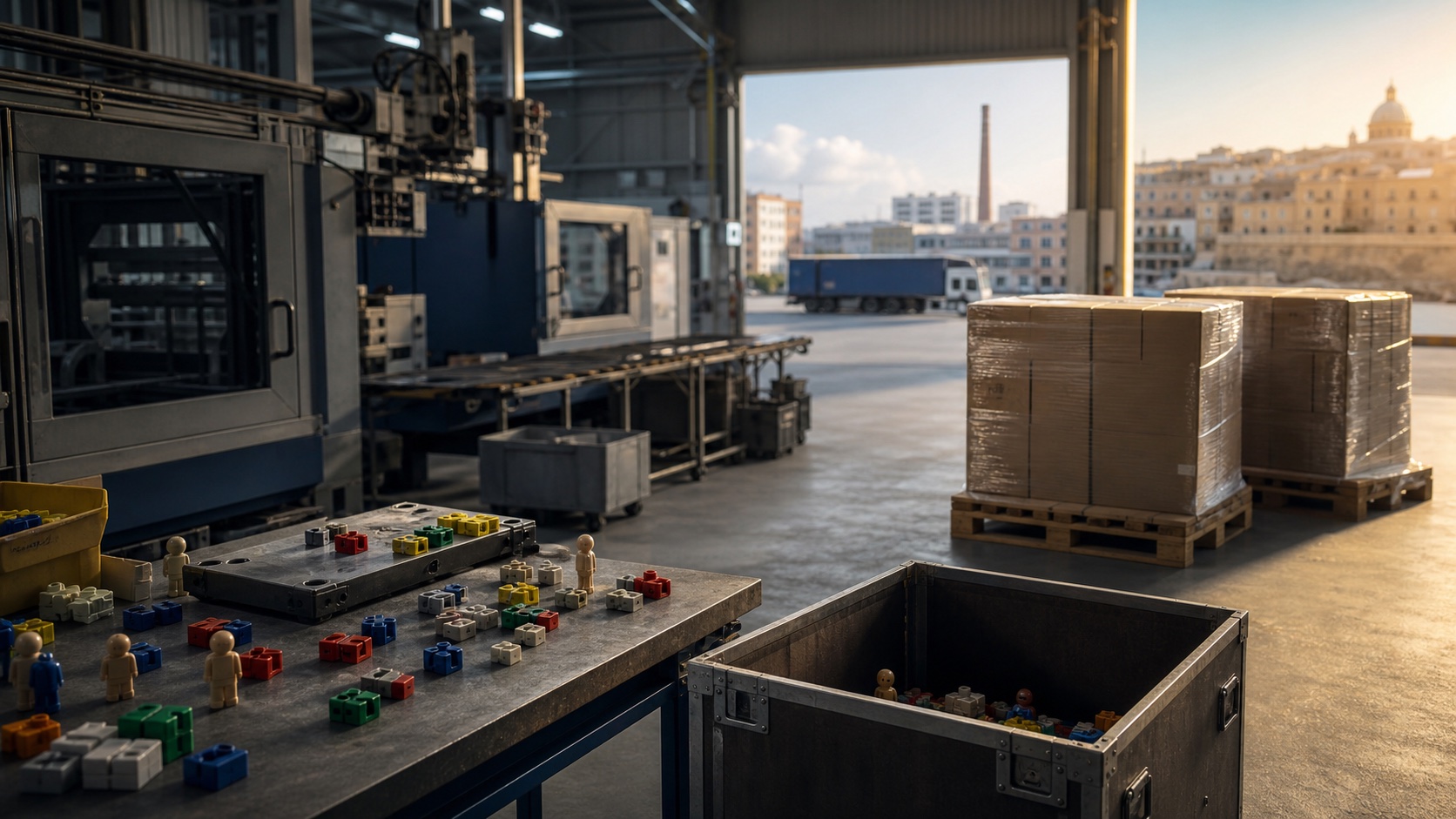
Open the article →Playmobil is ending production in Germany and shifting work to Malta and Czechia. The machinery move is only one part of the commercial transition.
Open the article →KAP plans to close its Hessisch Lichtenau site and transfer equipment and production volumes to Czechia and India. Here is the market work that follows.
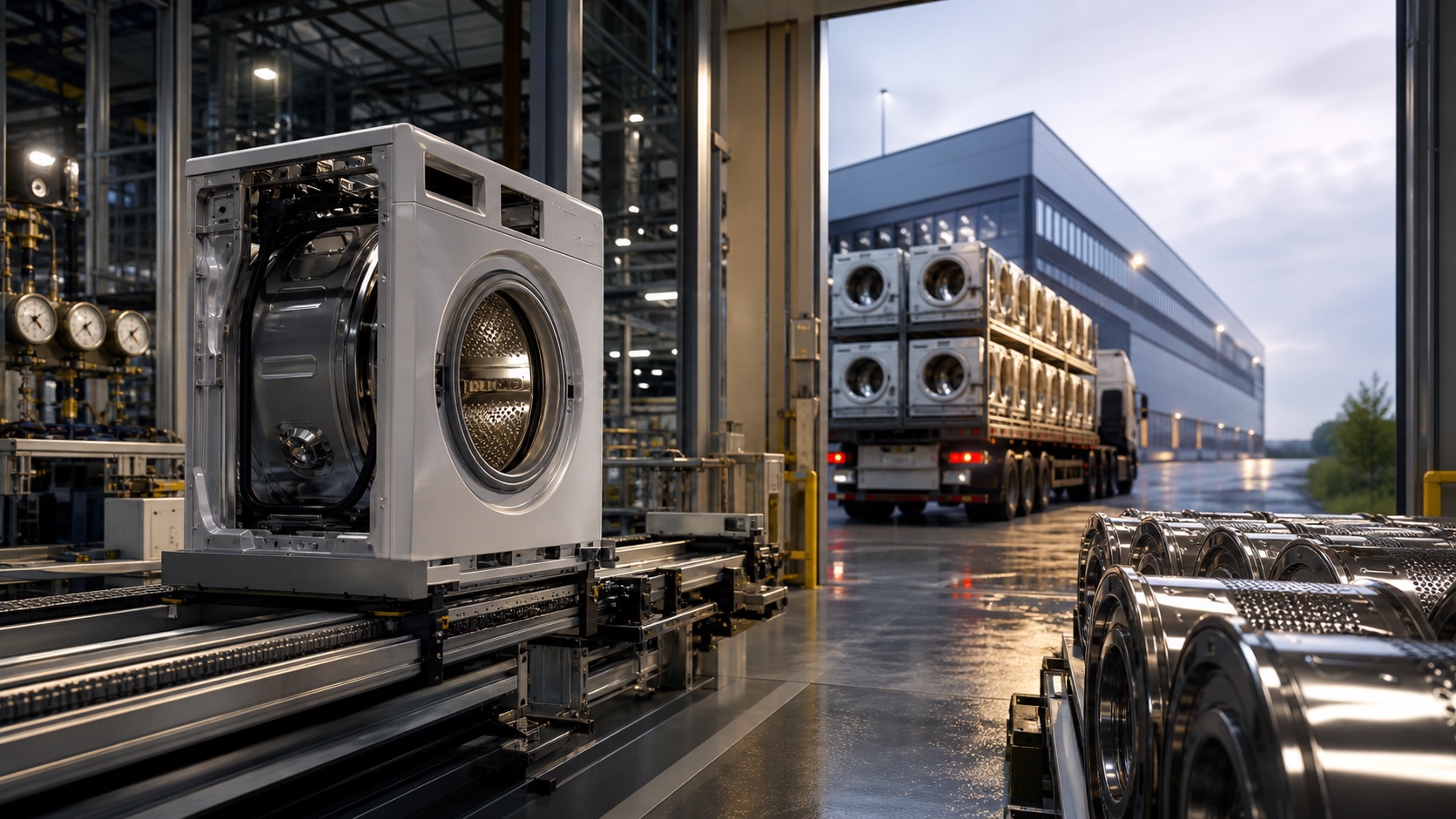
Open the article →Miele announced a plan to shift nearly all domestic washing-machine assembly from Gütersloh to Poland by 2027. The origin story, quality proof, and buyer message must move with it.
Open the article →ContiTech says some activities will move to countries with more competitive cost structures. Customers and receiving markets need a clearer commercial plan than that sentence provides.
Open the article →BASF is bundling finance and HR work in a new India hub. The move changes talent competition, employer positioning, internal trust, and the company story in more than one market.
Open the article →Neura Robotics shifted humanoid development from Metzingen to Zurich while production remained in Germany. The destination launch must speak to talent, partners, buyers, and media.
Open the article →Mercedes-Benz is expanding Kecskemét with new electric-vehicle production and a larger site. The facts show international capacity growth linked to German plants, not a verified departure.
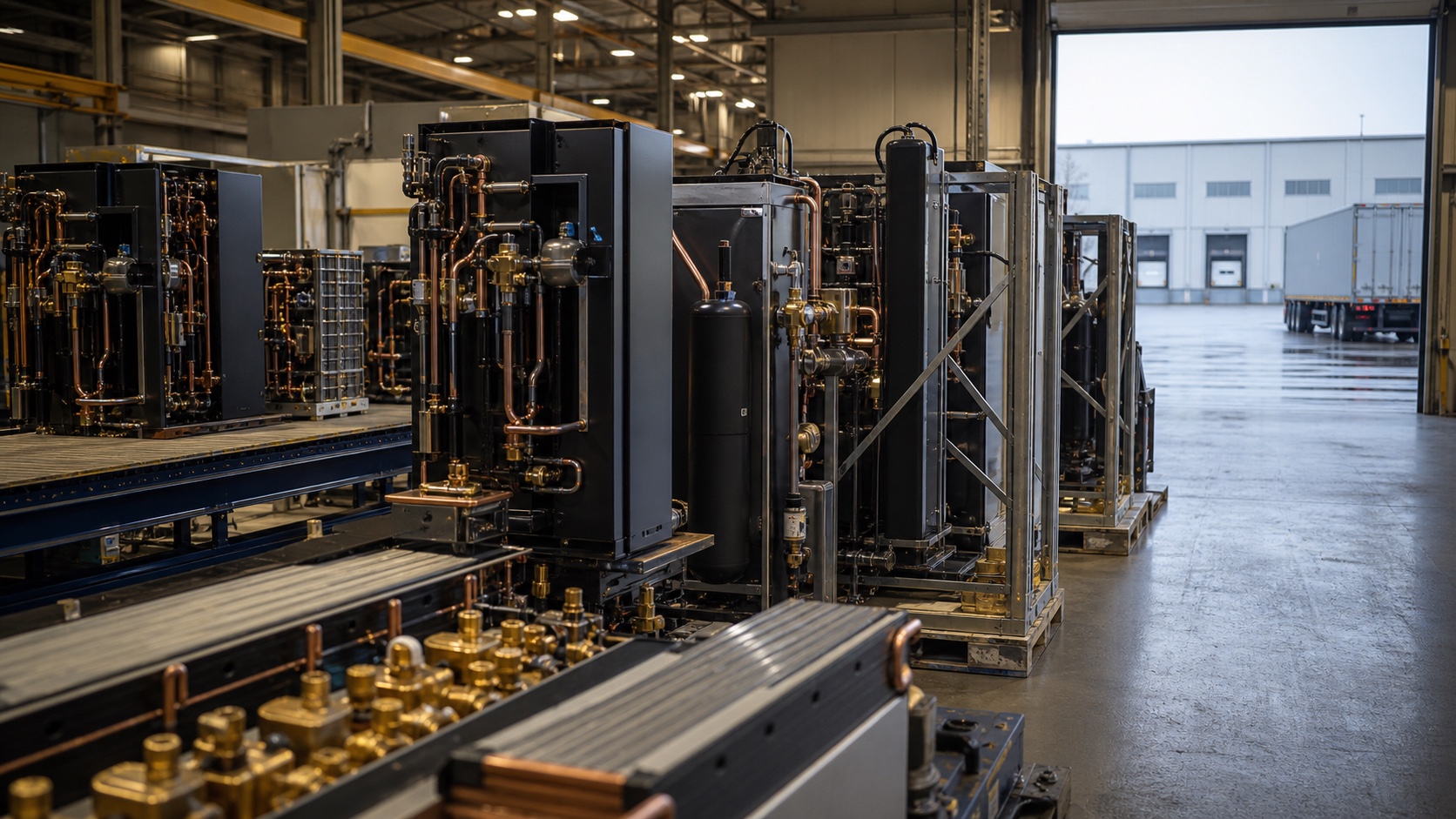
Open the article →Daikin announced a plan to transfer hydrobox and hydrokit production from Güglingen to Brno by June 2026. Completion after the target date is not verified here.
Open the article →Bosch has announced major German job and site changes. The public evidence does not show that Bosch is leaving Germany. Here is the fact boundary and the move-readiness lesson.
Open the article →Reports name German Volkswagen plants that could face risk after 2030 and cite much larger job-cut scenarios. Volkswagen has not confirmed the reported plant list or totals.
Open the article →Bloomberg reported in 2025 that Porsche considered limited final assembly in the United States to reduce tariff exposure. There is no current confirmation of that move.
Open the article →STIHL opened a major Romanian battery plant while investing heavily in its German founding company. The two facts belong together before anyone calls it a relocation.
Open the article →What Bosch's China business reveals about local automaker relationships, software-defined mobility, and the limits of export-led marketing.
Open the article →How to connect U.S. buyer questions, German product proof, regional pages, AI search visibility, and sales follow-up before adding more content.
Open the article →Why EU companies fail when they translate the home-market argument, what US buyers judge first, and what to rebuild before ads or distributors.
Open the article →Munich-Nürnberg-Augsburg-Erlangen corridor. BMW/Audi/Siemens-adjacent supply chain, Bavarian medtech, engineering-commercial firms, defense and dual-use operators.
Open the article →Bosch, ZF Friedrichshafen, Continental, Schaeffler, Mahle, Hella, Webasto, BENTELER. PPAP, APQP, IATF 16949 customer-specific requirements, USMCA RVC, IRA Section 30D battery sourcing.
Open the article →secunet, Rohde & Schwarz Cybersecurity, Genua, Utimaco. FedRAMP Rev 5, CMMC 2.0 Levels 1/2/3, NIST 800-171/53, IL2/IL4/IL5 DOD impact levels, ITAR/EAR architecture, FOCI mitigation.
Open the article →How Siemens Healthineers, BrainLab, Karl Storz, B. Braun, and Drägerwerk translate MDR (EU 2017/745) into FDA 510(k), De Novo, PMA, or IDE pathways. Q-Sub, Breakthrough Designation, US KOL architecture.
Open the article →SAM.gov registration, NAICS code mapping, GSA Schedule pathways, FAR Part 9 responsibility determination, capability statement structure, RFP/RFQ response system.
Open the article →For Mittelstand, family-controlled industrials, and DAX-listed operators. IRA tailwinds, FAR/DFARS procurement, MDR→FDA and IATF→US OEM regulatory translations.
Open the article →The cross-corridor pattern. Why the home buyer-language breaks. The three wrong instincts. What rebuilds in what order.
Open the article →The universal four-filter framework: category anchor, past-performance, peer-set comparables, risk answers. The buyer's order of evaluation in the first ninety seconds.
Open the article →The four-filter gate plus the ITAR-EAR architecture. US prime-contractor relationships across Tel Aviv, Stockholm, Seoul, London, Prague, Warsaw, and beyond.
Open the article →From KTH/MIT/Imperial spinout to US K-12, higher-ed, and enterprise-learning procurement. Boston as natural US destination.
Open the article →Wind, solar, hydrogen, battery, carbon capture, grid-scale storage. Technology credentials meet US payer-and-procurement architecture under the Inflation Reduction Act.
Open the article →The governance-line problem. Holding-brand discipline meets US-investor evaluation across 16 wealth corridors.
Open the article →Beyond consumer fintech, into the US enterprise stack. B2B payments, embedded finance, capital-markets infrastructure across London, Singapore, Tel Aviv, Stockholm, Amsterdam, São Paulo, Lagos.
Open the article →Italian, Korean, Japanese, Czech, Polish, Hungarian, Spanish, and Nordic industrials. Same structural failure mode, different surface registers.
Open the article →Why heritage as quality flag does not equal US category claim across Milan, Paris, Stockholm, Tokyo, and Madrid. The wholesale buyer evaluation and the DTC architecture.
Open the article →From London developer to Bay Area PropTech, the US-property-specific architecture overlay across London, Dubai, Singapore, Tel Aviv, Hong Kong.
Open the article →Why Tokyo consensus and Seoul scale land as silence to the US procurement buyer, and what to rebuild first.
Open the article →The founder pattern, the procurement buyer, and the rebuild across Tel Aviv, London, Singapore, and Seoul.
Open the article →Why FDA dominates the boardroom while US payer, KOL, society, and procurement architecture is what closes the deal.
Open the article →The architecture decision across Zurich, Geneva, Monaco, Luxembourg, Dubai, Singapore, Hong Kong, and London.
Open the article →How lawyers, trust officers, and family-office owners route owners into US operating engagements without commission.
Open the article →What diligence misses, where post-deal sales attrition clusters, and the two work-streams cross-border investors need.
Open the article →Why the Israeli unicorn frame lands as origin, not as commercial category, and where the US revenue gap closes.
Open the article →How Bay Area, NYC, DC, and Boston shape the procurement buyer, the peer set, and the rebuild. The destination decision is upstream of the architecture.
Open the article →How capital reroutes from London, Hong Kong, Zurich, Singapore, and Dubai, and what the American-facing story has to carry.
Open the article →Why precision language scores as process avoidance to US procurement, and what to rebuild first.
Open the article →How Dubai, Singapore, Hong Kong, Zurich, and London break at the US border, with rebuilds by city and buyer type.
Open the article →Why Swiss regulatory posture does not substitute for US payer, KOL, and procurement signals.
Open the article →Why the Greater China credibility signal does not carry to US procurement and commercial buyers.
Open the article →What needs to change in the American-facing brand and commercial story as Hong Kong private capital scales US exposure.
Open the article →Why UK government references do not substitute for US proof in federal, Fortune 500, and commercial channels.
Open the article →What the American-facing commercial story needs to carry as family-office capital re-sequences through the US corridor.
Open the article →How US intermediaries score the Singapore holding brand differently, and what has to be rebuilt before co-investment activity scales.
Open the article →Why strong science and IP often misfire at US KOL, payer, and website, offer, proof, and follow-ups.
Open the article →Why engineer-written positioning fails at the border even when the underlying product is strong.
Open the article →Why Swiss proof architecture does not land for US commercial buyers, and how to rebuild the story.
Open the article →Why regional infrastructure weight does not translate to US federal and state procurement officers.
Open the article →How DIFC-based family offices rebuild their US-facing brand for the American co-investor and intermediary.
Open the article →Why home-market brands do not translate, what American buyers evaluate, and the register gap that costs international firms time.
Open the article →