Hungarian talent
Show the site's model responsibility, technical careers, training, scale, and long-term production role.
The strongest story is not that Germany lost a factory. It is that a Hungarian site gained a larger role inside a linked European production system.
CONFIRMED EXPANSION, NOT A GERMAN EXIT. This status is based on Mercedes-Benz announcement on the Kecskemét plant extension. The source is dated July 13, 2026 and this page was checked on July 17, 2026.
The official source supports a large Hungarian expansion and a flexible European network. It does not support a headline claiming Mercedes is leaving Germany.
| Investment | Approximately EUR 1 billion at Kecskemét from 2022 through 2026. |
|---|---|
| Site growth | From about 200 hectares to around 440 hectares. |
| Employment | More than 5,000 people at the Hungarian plant. |
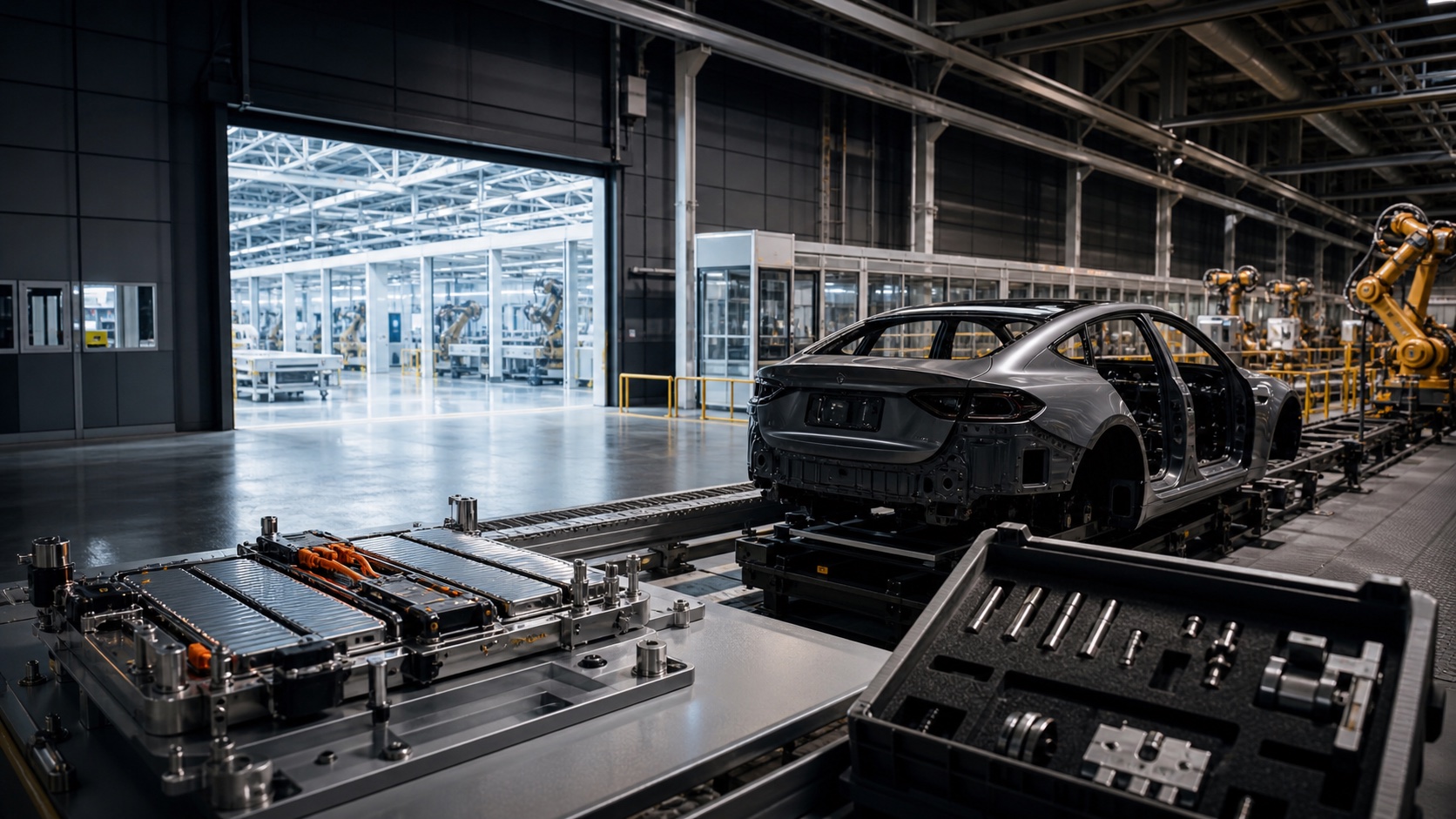
| New role | Production of the electric C-Class and the compact G-Class. |
| Germany link | Mercedes describes flexible production with German plants, including demand-based allocation for some models. |
GMA uses public sources to explain the market implications. GMA has no inside information about the company and does not present reported discussions as confirmed corporate decisions.
A site that doubles its footprint needs more than a construction announcement. It competes for skilled employees, supplier capacity, public support, logistics partners, and attention inside the global production network. Each audience needs evidence tied to its own decision.
Kecskemét also has to carry premium manufacturing credibility. Buyers may never visit the plant, but the company can still show how the site fits Mercedes standards, electric-vehicle capability, and European supply. That is different from using Hungary only as a cost story.
The German plants remain part of the narrative because the network is flexible. Clear site roles prevent the new capacity from being misread as a simple abandonment story and help suppliers and employees understand how production decisions may shift with demand.
The company needs a separate answer for each audience. Repeating one corporate statement everywhere usually leaves the real buyer question unanswered.
Show the site's model responsibility, technical careers, training, scale, and long-term production role.
Publish clear capability, procurement, contact, and qualification routes for the expanded plant.
Explain the site's electric-vehicle role and quality system without turning expansion into a false German-exit claim.
Describe the flexible plant network and keep model-allocation claims tied to current company statements.
| Audience map | Separate talent, supplier, customer, media, government, and internal-network questions. |
|---|---|
| Destination pages | Build localized Kecskemét capability, careers, supplier, and model-production routes. |
| Launch campaigns | Run targeted talent, supplier, and reputation campaigns around verified milestones. |
| Network updates | Update German and international pages whenever model allocation or site responsibility changes. |
The cited release confirms major Hungarian expansion and flexible production links. It does not announce a complete German production exit.
Mercedes announced electric C-Class production, compact G-Class production, expanded flexible capacity, and a site that has grown to roughly 440 hectares.
A larger site must win talent, suppliers, partners, and public trust. It also needs a clear role inside the company's international production story.
GMA builds the destination positioning, localized website, search visibility, paid campaigns, supplier and talent communication, and launch material.
Build the buyer story, proof, search visibility, campaign path, and partner material for an American launch.
Open the U.S. route →Turn an approved destination into a localized market position and demand path.
Open the international route →See how GMA structures cross-border market work after the operating decision.
Open engagements →